
benb.ai

ENGINEER

PORTFOLIO / WORK IN DEVELOPMENT

Ben Barrey.

Work &
research.

Explore the work

I’m an engineer building The Misty Road, a gothic strategy game, alongside AI tools, home robotics experiments, and a drone project for environmental monitoring. This is where I share the work, the ideas behind it, and what I’m learning.

SCROLL TO EXPLORETHE MISTY ROAD · CONCEPT ATMOSPHERE
GAME DEVELOPMENTPHYSICAL AI & ROBOTICSAGENTIC SOFTWARERESEARCH & EXPLORATION

01 / SELECTED WORK

Projects in development.

Five projects across games,
AI software, and robotics.

Concept artwork of a misty road through a gothic landscape
Prototyping
CONCEPT ATMOSPHERE
THE
MISTY ROAD
01 / GAME DEVELOPMENT Unreal Engine

The Misty Road.

The Misty Road is my solo gothic fantasy strategy game. I want players to feel the pull of an unfamiliar world: strange creatures, a troubled history, and a story that rewards curiosity. Turn-based combat gives that journey its rhythm.

Current work

Combat prototype · 3D characters · Greybox levels

Inside the project

Games like Diablo II and Oblivion made me want to create a world of my own. That ambition stayed with me while I took a different path into engineering. Connecting AI tools to Unreal Engine and Blender finally made the project feel within reach as a solo developer. That experience is part of why access to capable tools matters so much to me: it changes what one person can attempt.

I’m working out the combat, designing characters, and blocking out levels. The setting takes shape around centuries of conquest: feudal powers, compromised institutions, feral beasts, and the shadow of an overlord. I want its history to emerge through the player’s discoveries, with the atmosphere and intrigue that first drew me to games.

Read the equipment design note
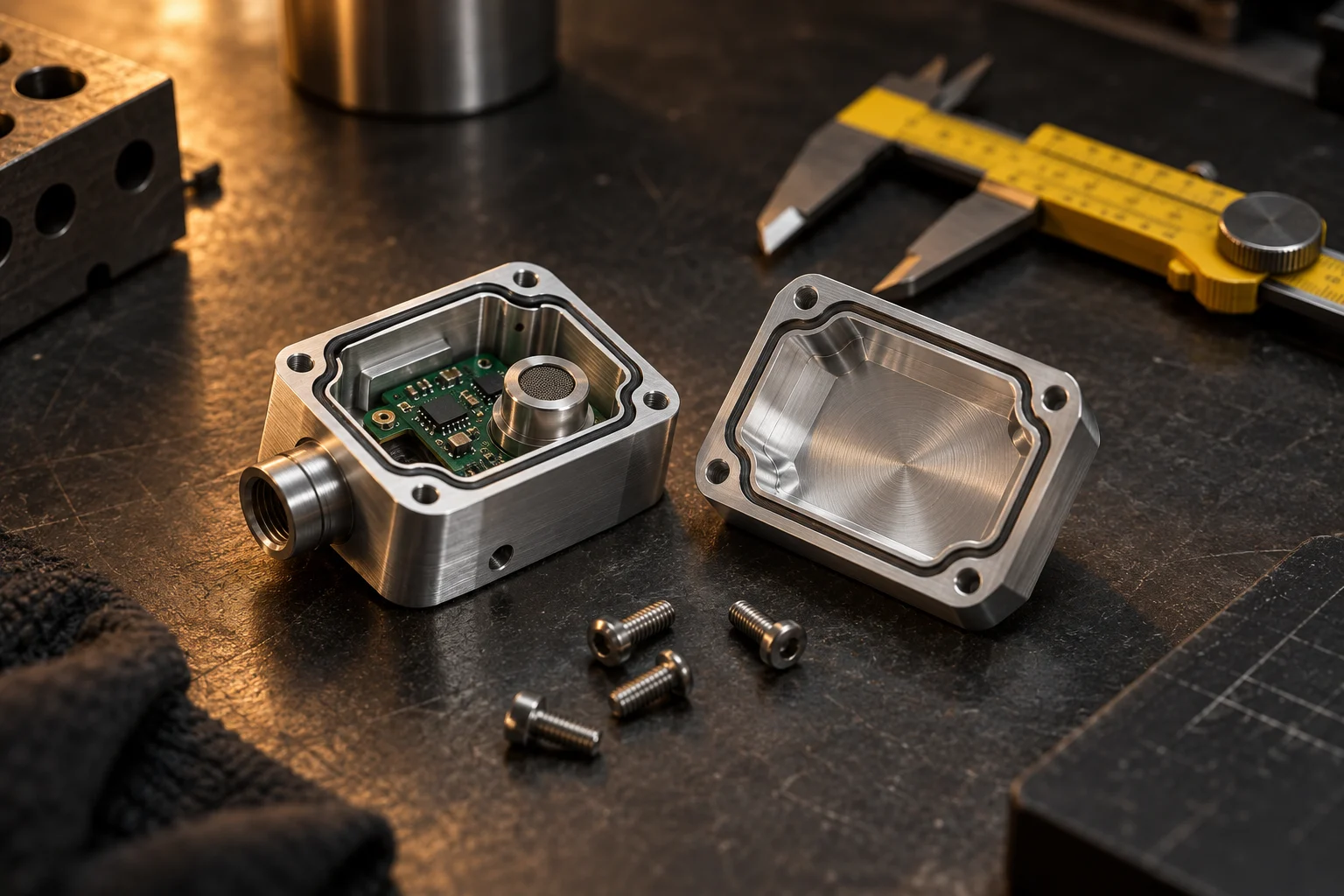
Illustrative concept of a machined sensor enclosure on an engineering workbench
Learning & building
ILLUSTRATIVE CONCEPT
02 / PHYSICAL AI & ROBOTICS Onshape

Physical AI & Robotics.

I want useful robots to become something more people can build, understand, and adapt at home. I’m starting with simple machines, printed parts, and the electrical and mechanical foundations, working toward robots that give people more time and independence.

Current work

Home lab setup · Electromechanics · Parts in Onshape

Inside the project

This is a new venture for me. I’m learning the electrical and mechanical foundations while putting together a home lab and the tools to print parts I design in Onshape. My first builds will combine those parts with readily available components.

Over time, I want to work on more capable open-source robots that can help around the home, with local AI connecting the software I can run myself to hardware I understand. Everyday chores are a starting point; support for older people is another application I’d like to explore. For now, the work is understanding how the parts, electronics, and software come together.

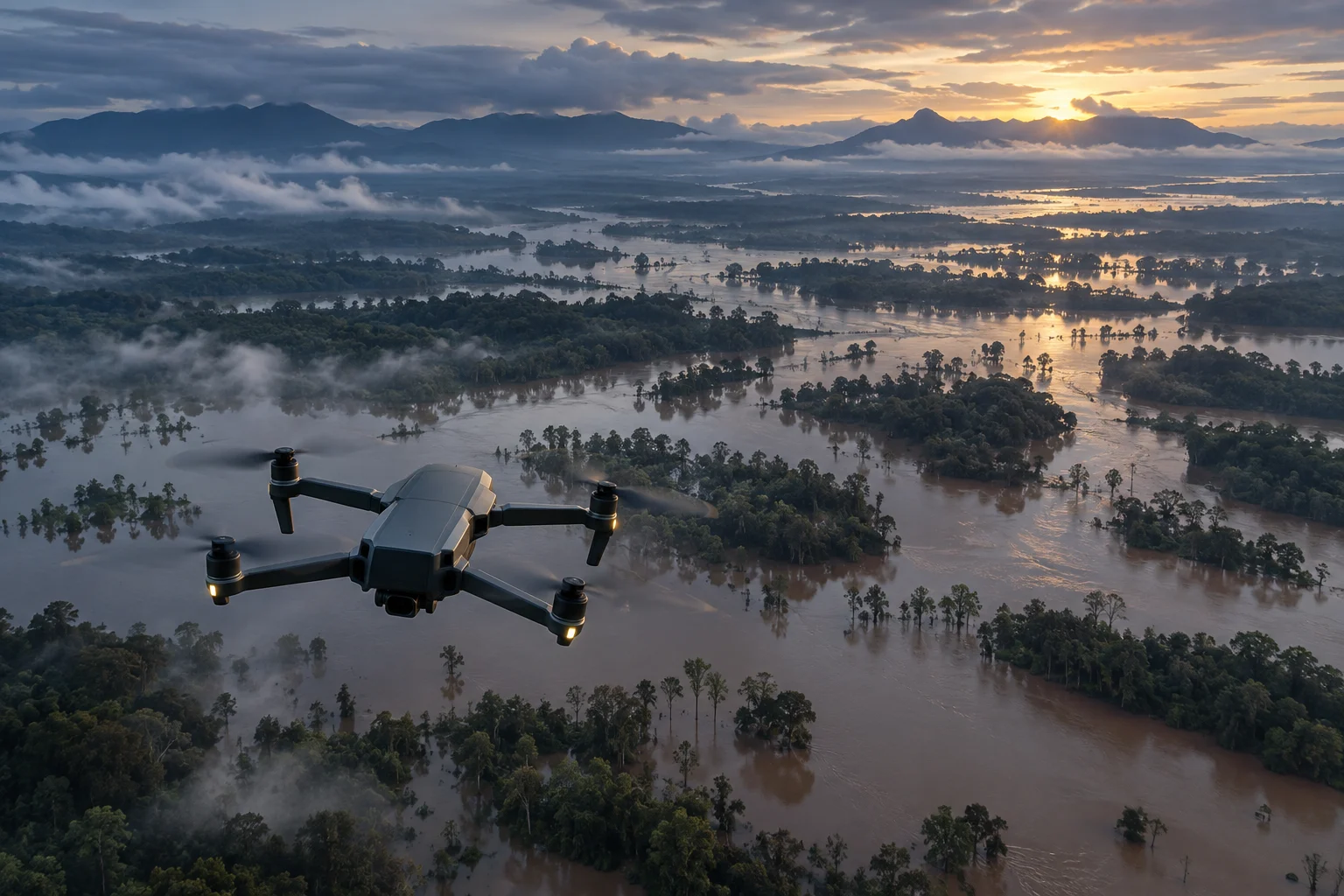
Illustrative concept of a drone observing a flooded river landscape
Research & early training
ILLUSTRATIVE CONCEPT
03 / AGENTIC SOFTWARE AI + drones

Agentic Software Development.

My first drone AI project applies my engineering background to oil-spill monitoring and disaster response. I’m exploring how an agent could turn aerial observations into useful information for the people deciding what to do next.

Project · Disaster response

Beginning data collection and model training

Inside the project

With a drone of my own, I’m starting to put the research into practice. The first question is practical: can a model distinguish oil from things that resemble it, such as glare, algae, or sediment, as conditions change?

My training in environmental engineering helps me connect the software to the realities of response work. The longer-term aim is an agent that can follow a developing situation and help plan the next observation. I’m also interested in world models as a way for agents to learn how an environment changes. These are questions I’m working toward from this early stage.

Concept artwork of a luminous gold network representing Turi, a personal AI agent
In development
turi_PERSONAL AI / HERMES AGENT
CONCEPT ARTWORK
04 / AGENTIC SOFTWARE Hermes Agent

Agentic Software Development.

Turi is my personal AI, built around a choice that matters to me: it runs locally on Ubuntu with open-source models. I’m developing it into a personal operating system that can manage more of the work behind everyday life.

Project · Turi

Local AI · Ubuntu · Open-source models

Inside the project

I built Turi on Hermes Agent with the idea of a digital counterpart that understands how I work. I want it to connect my home automation and digital services, and eventually help with tasks across finances, marketing, and content creation.

Running Turi locally is a practical expression of what I believe about AI. I want to keep using and adapting my system even as providers change their prices, policies, or access. Open-source models give me a foundation I can build on, and a way to learn what it takes to make personal AI more accessible.

Private project
WORKFLOW DIAGRAM
05 / AGENTIC SOFTWARE Foundry VTT

Agentic Software Development.

I built Foundry-Forge to put agents to work inside Foundry VTT. Its MCP server and addon give them a broad set of tools for creating scenes, actors, and journals, uploading assets, and working with world scripts.

Project · Foundry-Forge

MCP server · Foundry VTT addon · Private repository

Inside the project

Foundry-Forge extends an open-source bridge originally built by Adam Dooley. I’ve expanded it into a suite of tools for agents to work directly with a Foundry world, from campaign content to the scripts and assets that support it.

My additions include building NPCs and checking them against source material, matching portraits and tokens to characters, and managing quests and handouts. This has become a substantial part of my agent development work: giving an agent the tools to make changes inside software I use. The server, addon, and repository are currently private.

RESEARCH & EXPLORATION

Research interests.

I’m curious about both what technology could make possible and who will get to use it. These interests reach beyond AI into energy, living systems, new kinds of computing, and space. They’re subjects I’m exploring and hope to write about as I learn.

Computation & autonomy
  • Optical & Photonic Computing
  • Distributed Autonomous Systems & Drone Swarms
  • Neural Interfaces & Brain-Computer Communication
  • Neuromorphic Hardware & Brain-Inspired Chips
  • Quantum Computing & Cryptographic Systems
Space & transportation
  • Asteroid Mining & Space Resource Extraction
  • Deep Space Propulsion & Interstellar Logistics
  • Hypersonic & Orbital Transportation Systems
Life & materials
  • Biomimetic Materials & Self-Healing Structures
  • Genome Editing & Epigenetic Reprogramming
  • Molecular Nanotechnology & Programmable Matter
  • Organ Synthesis & Xenotransplantation
  • Synthetic Biology & Bio-Manufacturing
Energy & planet
  • Atmospheric Carbon Removal & Geoengineering
  • Nuclear Fusion & Next-Gen Plasma Energy

02 / TOOLS & LANGUAGES

Toolkit.

The languages, tools, and systems
behind the work.

Languages

Python and C++ are my main languages at the moment, especially in game development. I also work with web technologies, databases, and shell scripts.

  • Python
  • C++
  • HTML / CSS
  • JavaScript
  • SQL
  • C
  • Bash / Shell

Learning: C#, PowerShell, Rust, Assembly, PHP, Lua, and Go.

AI development

I use several coding agents and development environments. The mix changes as I try new tools and find what works for each project.

  • Claude Code
  • Codex
  • Grok Build
  • Muse Build
  • Cursor
  • OpenCode
  • JetBrains

Learning: CUDA and PyTorch.

3D & physical design

Building game worlds and characters, working with generated imagery, and designing parts for the robots I’m learning to build.

  • Unreal Engine
  • Blender
  • Onshape
  • ComfyUI

Local AI & workspace

My workspace brings together local AI with open-source models, Hermes Agent, and Obsidian for keeping ideas and project notes connected.

  • Omarchy
  • Hermes Agent
  • Obsidian

Currently following

World Labs and new approaches to generating 3D worlds, alongside the wider changes in modeling software and AI development tools. There’s plenty here I want to explore and write about.

03 / NOTES & IDEAS

Notes from the work.

Decisions and lessons from projects in progress.

DESIGN NOTEGame development · 2 min read

Gothic gear has to work beyond the concept art.

Readable silhouettes, grounded equipment, and details that survive the move to 3D.

WHY OPEN SOURCE MATTERS TO ME

AI should be
within reach.

I’m an engineer building AI software and learning to build robots at home. I want powerful tools to be within reach of more people. Open-source models, local computing, and the freedom to build and adapt things ourselves are central to that work.

I worry about a future where access to AI deepens the divide between people who can afford powerful tools and people who can’t. When access can be withdrawn, policies can change, and costs can put useful systems out of reach, the question becomes who gets to participate.

I see open source as essential to preventing that divide. Models people can run locally, software they can inspect and adapt, and robotics they can build on create room for more people to take part. For me, decentralized AI means putting that capability in homes and communities, with ownership spread beyond a few providers.

My engineering education taught me how to learn across fields. Today, I’m applying that foundation at home: building a personal AI on Ubuntu, writing tools that let agents work inside other software, and learning the electronics and mechanics to build robots. I’m working on both layers—the software that makes decisions and the hardware that acts on them.